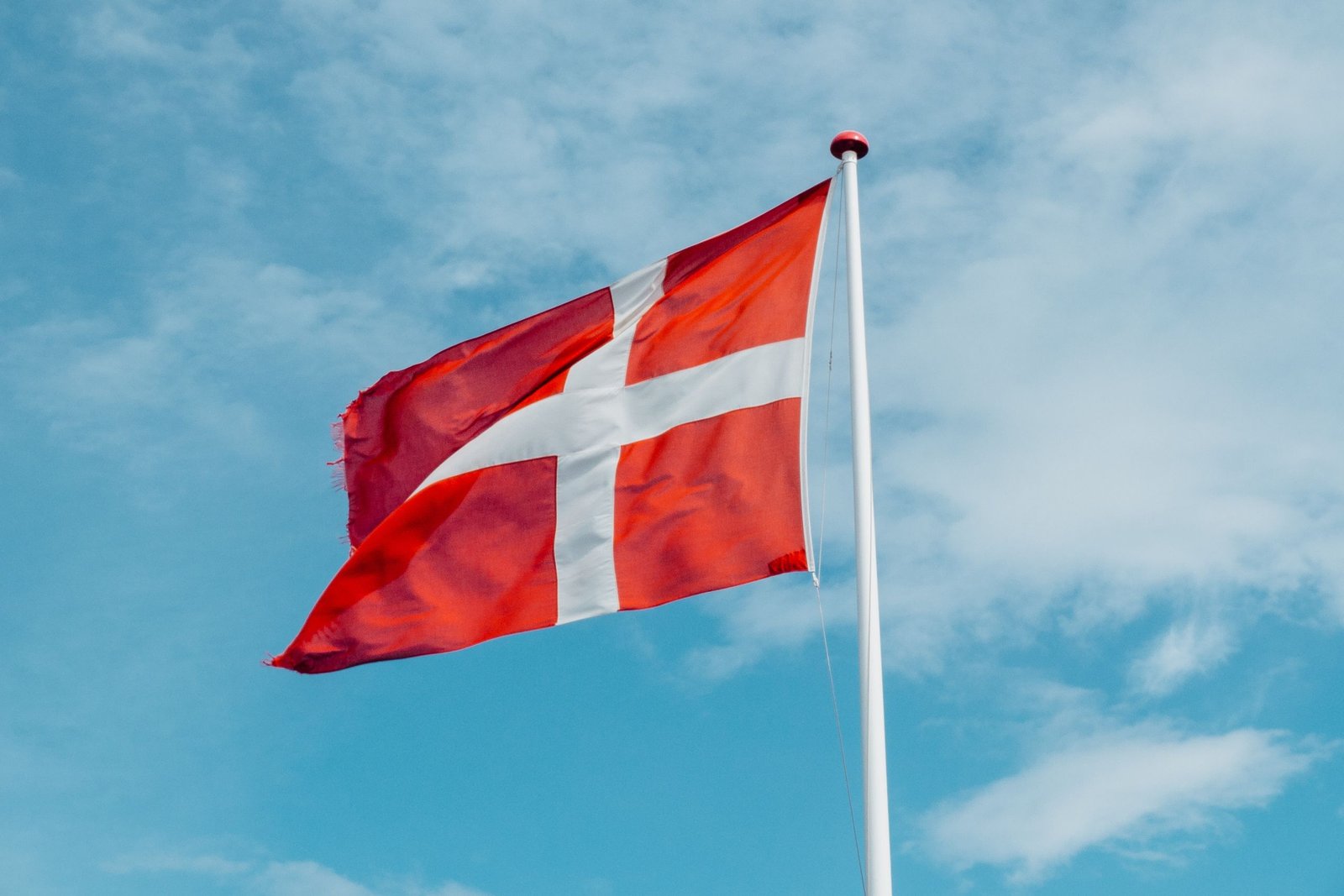
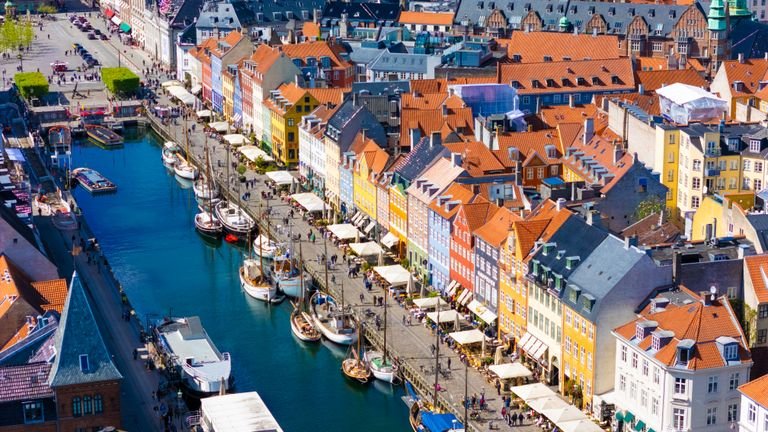
Denmark might not be the first country that pops into your head when you think about vegan travel. The country has historically been a big meat-and-dairy nation, so it makes sense if you’re a little skeptical going in. But Denmark, especially Copenhagen, has quietly become one of the most exciting plant-based destinations Europe. There are fully vegan Michelin-starred restaurants, organic markets everywhere, and a government that is actively pushing plant-based food as part of its green transition strategy. I put together these 15 vegan travel tips for Denmark to help you navigate the country with confidence, eat well at every meal, and spend less time stressing and more time actually enjoying one of the most beautiful places I’ve ever visited.
1. Learn Key Danish Phrases for Vegan Food
A few well-placed Danish phrases go a long way, especially when you’re eating at a small neighborhood café that might not have an English-speaking server on hand. Most Danes do speak excellent English, but showing that you’ve done a little homework earns you some goodwill and makes the conversation much smoother.
Start with jeg er veganer (pronounced “yai air veh-GAH-ner”), which means “I am vegan.” If you want to ask whether something contains animal products, try indeholder det animalske produkter? (pronounced “in-deh-hawl-er deh ah-nee-mal-skeh pro-dook-ter”) – it roughly translates to “does this contain animal products?”
Keep a note on your phone with these key Danish ingredient words to watch out for: mælk (milk), smør (butter), æg (eggs), and honning (honey). If you spot any of those on a label or in a menu description, it’s not vegan. Having these saved somewhere accessible saves you from a lot of frustrated squinting at ingredient lists in a busy supermarket.
2. Look for the “Vegansk” Label and the Sunflower Logo
| Label Type | What It Means |
| Green “Vegansk” label | Certified vegan product |
| Vegan Society Sunflower | Internationally verified vegan |
| Generic leaf logo | Could be vegetarian — check the ingredients |
Luckily, there are two quick visual shortcuts that make standing in the snack aisle of a Danish supermarket and staring at a wall of text in a language you don’t read much easier.
Look for the green “Vegansk” label, which is used by Danish brands to flag products as fully plant-based. You’ll also see the Vegan Society sunflower logo on plenty of imported and locally made products across the country.
These labels are especially common at larger chains like Føtex and Bilka, which carry a strong range of vegan alternatives including plant-based milks, cheeses, and ready meals. The Danish brand Naturli’ is worth knowing by name too, they produce everything from pea-based mince to oat-based ice cream, and you’ll spot them in almost every major grocery store.
3. Shop at Torvehallerne, Copenhagen’s Covered Food Market
If there’s one food stop you absolutely should not skip in Copenhagen, it’s Torvehallerne. This covered market in the Nørreport area of the city is split across two glass halls and filled with stalls selling everything from fresh herbs and seasonal vegetables to cold-pressed juices, vegan pastries, and specialty grocery items.
You can grab a completely plant-based lunch just by wandering around and picking things up from different vendors. It’s also where you’ll find the Grød stall, which serves the brand’s famous porridge in sweet and savory variations, most of which are either vegan or easily made vegan on request.
Bring a reusable bag, plan to stay longer than you expect, and don’t eat a big breakfast before you go. The market is open daily, making it an easy stop no matter when you’re visiting the city.
4. Try Naturally Vegan Danish Dishes
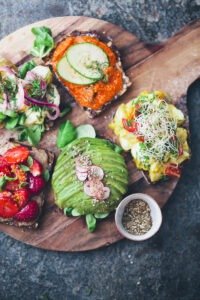
You totally don’t have to survive on just international food while you’re in Denmark. Several traditional dishes are either naturally plant-based or have well-established vegan versions that local restaurants take seriously.
Rugbrød (rye bread) is the foundation of Danish food culture and is almost always vegan by default. It’s dense, slightly sour, and incredibly filling. Pick up a loaf at any bakery or supermarket and use it as the base for your own vegan toppings from the market.
Smørrebrød is the iconic open-faced Danish sandwich, traditionally piled high with fish or meat. But many modern Copenhagen spots now offer vegan versions with roasted vegetables, hummus, pickled beets, and herbed cashew spreads. The key is to look for cafés that specifically call out vegan smørrebrød on their menu rather than asking a traditional spot to improvise.
Havregrød, oat porridge, is another staple that’s been a part of Danish food culture for centuries, and it happens to be naturally plant-based when made with water or plant milk.
5. Visit a Fully Vegan Fine Dining Restaurant: ARK
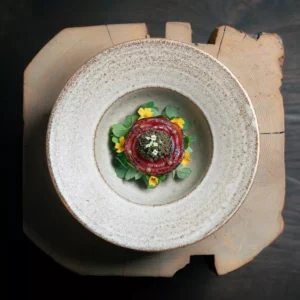
If you want to treat yourself to something genuinely special, Restaurant ARK in central Copenhagen is on a completely different level. It’s the first vegan restaurant in the Nordics to earn a Michelin Green Star, and it serves a seasonal tasting menu built entirely around local, foraged, and sustainably sourced ingredients. Even the wines are vegan and low-intervention.
The menu changes with the seasons, so every visit feels different. Dishes are creative without being pretentious, you’ll get clean, precise flavors that actually showcase what plant-based food can do when a skilled kitchen takes it seriously.
Book ahead, because it fills up fast. If you’re visiting for a special occasion or you just want one knockout meal during your trip, this is the one.
- Expect a multi-course sharing format with optional wine pairings
- The kitchen grows some of its own mushrooms on an in-house farm
- Ask for the botanical non-alcoholic pairing if you don’t drink wine
- Reservations are available directly through their website
6. Download HappyCow and Offline Maps Before You Arrive
This one applies to vegan travel in any country, but it’s worth repeating because it makes such a difference. Copenhagen’s public Wi-Fi is decent, but if you’re heading outside the city to places like Aarhus, Odense, or the countryside, you can’t always count on a reliable signal when you’re standing on a street corner trying to find lunch.
Download HappyCow before you leave home and save every spot you want to visit as a list. Then go into Google Maps and download the offline map for the regions you’re visiting so you can navigate without data.
- Create a Google Maps list called “Denmark Vegan” and add every HappyCow find to it
- In Google Maps settings, download the offline map for Copenhagen and any other cities on your itinerary
- Keep your hotel or Airbnb address saved somewhere easily accessible in case your phone dies
- Screenshot the addresses of your top three restaurant picks each morning before you head out
Having this set up in advance turns a stressful “I’m starving and lost” situation into a quick two-tap problem solved.
7. Check for Oat Milk at Cafés – Denmark Is Ahead of the Curve
Denmark has one of the highest per capita rates of oat milk consumption in the world, which means finding a café that stocks plant-based milk alternatives is genuinely not a problem in most of Copenhagen and the larger cities. Oat milk specifically has become the default for a huge chunk of the local café scene.
Ask for havremælk (oat milk), sojamælk (soy milk), or mandelmælk (almond milk) when you order. In Copenhagen’s specialty coffee scene, you likely won’t even need to ask, many baristas will confirm your milk preference automatically.
In smaller rural towns, the options narrow a bit. Carrying a small shelf-stable carton of your preferred plant milk is a smart backup for day trips outside the city. Just order a black coffee and add your own if needed.
8. Eat Breakfast at Grød
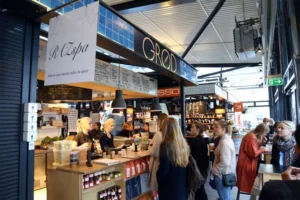
Grød is a Copenhagen original; the world’s first dedicated porridge bar, which started in a tiny basement on Jægersborggade in Nørrebro back in 2011 and has since expanded to multiple locations across the city.
The concept is simple: porridge done properly, in every form imaginable. The breakfast menu covers sweet options like oat porridge with seasonal fruit compote and toasted almonds, and the lunch and dinner menu shifts to savory grain bowls like daal, congee, and risotto. Most of the menu is naturally vegan or can be made vegan with a quick swap.
It’s affordable, filling, and one of the most authentically Danish food experiences you can have in the city. If you’re staying in Nørrebro, the original Jægersborggade location is a short walk and worth the trip for the neighborhood alone. There’s also a stall inside Torvehallerne if you prefer a central location.
9. Book Accommodation with a Kitchen
| Feature | Standard Hotel | Apartment/Airbnb |
| Kitchen access | None | Full kitchen |
| Breakfast | Pre-set buffet | Build your own from the market |
| Cost | Usually higher | Often more affordable |
| Flexibility | Limited | Cook whatever you want |
Copenhagen is one of the most expensive cities in Europe, and eating out for every single meal adds up fast. Renting an apartment or booking a place with at least a kitchenette changes the economics of your whole trip.
You can stock up at Torvehallerne or a local Føtex with fresh produce, plant-based proteins, vegan cheese from the Naturli’ range, and whatever else you need to put together a proper breakfast and a light lunch without spending a fortune. Save the restaurant budget for the meals that really deserve it, like dinner at ARK or a splurge at one of the city’s excellent vegan bistros.
Look for listings that specifically mention a stove and a fridge in the description. A kettle and microwave alone won’t cut it if you’re planning to cook. My guide on how to book vegan friendly accomodations is a great place to start!
10. Explore Freetown Christiania for Low-Key Vegan Food

Freetown Christiania is Copenhagen’s famous semi-autonomous neighborhood, and it’s worth visiting for the atmosphere alone. But it also has a genuinely good vegan food scene tucked away among the street art and alternative community spaces.
Morganstedet is a long-running organic vegetarian café inside Christiania run by volunteer chefs and servers. The menu changes daily, everything is made from scratch, and the portions are generous. It’s relaxed and cash-friendly, and it gives you a very different side of Copenhagen than the design hotels and Noma-adjacent fine dining spots.
Wander through the main market area before you eat, there are often small food stalls and vendors selling plant-based snacks, fresh juices, and local produce. The whole place runs on its own pace, so arrive without rigid expectations and go with whatever’s happening.
11. Pack High-Protein Snacks for Train Travel Between Cities
Denmark is a compact country, but if you’re planning to travel between Copenhagen, Aarhus, Odense, or Aalborg by train, you’ll want something in your bag that’s more sustaining than the overpriced chips at the station kiosk.
Train station food in Denmark is better than in many countries, but vegan options are still limited to the obvious stuff. Packing your own keeps your energy steady and your wallet intact.
- Roasted chickpeas are filling, crunchy, and easy to carry without refrigeration
- Nut butter packets pair well with a piece of fruit you grab at the market before you leave
- Rye crispbread with individual hummus packs gives you something closer to an actual snack than a handful of trail mix
- Dried edamame is light, high-protein, and doesn’t crush to dust the way crackers do
Grab a refillable water bottle and use it throughout the trip. Denmark has excellent tap water, you never need to buy a plastic bottle.
Be sure to check out the essential vegan travel guide to make sure you have everything you need for a fantastic trip.
12. Use Organic Grocery Stores Like Urtekram and Bio Mio

Denmark has a strong organic food culture built on decades of government support and consumer demand. This makes it one of the easier European countries to navigate when you’re looking for clean, clearly labeled plant-based products.
The brand Urtekram is worth knowing, it’s a Danish organic brand that produces a wide range of plant-based pantry staples, personal care items, and specialty foods, and you’ll find their products in health food stores and larger supermarkets across the country. Their products are clearly labeled and widely trusted.
For organic grocery shopping with a full vegan selection, look for specialty health stores in Copenhagen’s Vesterbro and Nørrebro neighborhoods. These areas have the highest concentration of independent organic food shops, and they’re both great neighborhoods to wander through anyway.
When in doubt at a standard supermarket, the Føtex and Bilka chains have the most reliable vegan sections, including refrigerated ready meals, plant-based dairy, and a solid snack selection.
13. Look Into Eco-Friendly Hotels with Vegan Breakfast Options
Denmark takes environmental certification for businesses seriously, which means several hotels have made plant-based eating part of their sustainability commitments rather than an afterthought.
Scandic Hotels, the large Nordic chain with multiple properties in Copenhagen, has committed to increasing their plant-based food options significantly and has vegan-friendly breakfast available at most properties. The Scandic Spectrum location includes Restaurant Ansvar, which focuses on sustainable, seasonal cooking with strong vegan options.
Manon Les Suites in Copenhagen is a boutique eco-hotel that offers vegan and gluten-free breakfast options on request. It’s a good choice if you want accommodation that aligns with your values without having to make a big production of asking about food every morning.
Always email ahead to confirm vegan breakfast options before you arrive. Most eco-certified hotels are used to this question and happy to accommodate. And if you’re interested in learning more about eco-travel, here are 10 reasons to be eco-conscious while traveling.
14. Take a Plant-Based Nordic Cooking Class
I believe that one of the best souvenirs you can bring home from any trip is a skill you can actually use. Copenhagen has a growing number of cooking workshops focused on Nordic cuisine, and several specifically highlight plant-based approaches to traditional Danish and Scandinavian flavors.
Look for classes that teach you how to work with fermented vegetables, foraged herbs, and whole grains, these are the building blocks of modern Nordic cooking and they translate beautifully to a plant-based home kitchen. A good class will show you that rye bread, pickled vegetables, and smoked plant proteins can carry the same depth of flavor as the traditional meat-heavy versions.
Search for Copenhagen cooking classes on platforms like Airbnb Experiences or Cookly, and filter specifically for plant-based or vegetarian options. Booking through a local host is usually more interesting than a big commercial kitchen school, and you’ll often leave with a personal recipe card and a connection to someone who actually lives and eats there.
15. Research Vegan-Friendly Side Dishes at Traditional Danish Restaurants
You don’t need to stick exclusively to fully vegan restaurants to eat well in Denmark. Many traditional Danish restaurants serve side dishes and smaller plates that are naturally plant-based, and it’s worth knowing what to look for on the menu.
Pickled vegetables, especially red cabbage, beets, and cucumber, are a staple of Danish food culture and almost always vegan. Roasted root vegetables seasoned with fresh herbs are common on most menus. Rugbrød with a simple spread is another fallback that’s both authentic and filling.
When you’re at a more traditional spot, ask the server which of their side dishes are cooked without butter or cream. Most kitchens are used to the question, and a meal made up of three or four well-chosen sides is often more interesting than a single dish from the “vegetarian option” section anyway. Denmark’s produce quality is excellent, so even the simplest preparations tend to taste genuinely good.
Wrapping Up
Traveling through Denmark as a vegan is more than manageable, it’s actually a really good time. The country’s deep investment in sustainability, its café culture, and its rapidly evolving food scene make it one of the most welcoming plant-based destinations in northern Europe right now. Whether you’re splurging on a tasting menu at ARK, picking up breakfast at Grød, or just wandering through Torvehallerne with a bag full of market finds, you’re going to eat well here. These 15 tips give you a solid foundation before you even land. Planning a trip to Denmark and want some personalized help? Send me a message – I’d love to help you put together a trip that works.
Is Denmark a good country for vegan travelers?
Denmark, particularly Copenhagen, has become one of the most vegan-friendly destinations in northern Europe. The city has fully vegan Michelin-starred restaurants, strong organic grocery options, and a culture that takes plant-based eating seriously as part of a broader sustainability commitment.
What Danish foods are naturally vegan?
Several traditional Danish foods are naturally plant-based, including rugbrød (rye bread), havregrød (oat porridge), pickled vegetables like red cabbage and beets, and many of the grain-based side dishes served at traditional restaurants. Smørrebrød (open-faced sandwiches) can also be ordered in vegan versions at modern Copenhagen cafés.
What are the best vegan restaurants in Copenhagen?
Restaurant ARK is the standout for special occasions — it holds a Michelin Green Star and serves a seasonal plant-based tasting menu. For casual dining, 42Raw is a well-established plant-based café with multiple locations, and Grød is a must-visit for breakfast or lunch with its creative porridge and grain bowl menu.
How do I say “I am vegan” in Danish?
The phrase is “jeg er veganer” (pronounced roughly “yai air veh-GAH-ner”). It’s also helpful to know the Danish words for common animal ingredients: mælk (milk), smør (butter), æg (eggs), and honning (honey) – so you can read labels and menus more easily.
Is it easy to find oat milk and plant-based milk in Denmark?
Yes – Denmark has one of the highest oat milk consumption rates in Europe, and plant-based milk options are widely available in both cafés and supermarkets throughout the country. In Copenhagen especially, most specialty coffee shops offer oat milk as standard.