

This content is reader-supported, which means if you click on some of our links, we may earn a small commission at no additional cost to you.
England is one of the most underrated vegan destinations in the world. London alone has more fully vegan restaurants than most entire countries, and the scene outside the capital, in cities like Bristol, Brighton, and Manchester, is growing faster than almost anywhere in Europe. Whether you’re spending a week in London or doing a bigger trip across the country, eating well as a plant-based traveler here is genuinely not a challenge. I put together these 15 vegan travel tips for England to help you get the most out of every meal, skip the rookie mistakes, and find the spots that are worth your time.
1. Know That England Is One of the Most Vegan-Friendly Countries in the World
England, and London specifically, consistently ranks at the top of global lists for plant-based dining. The city has well over 100 fully vegan restaurants plus thousands of vegan-friendly spots, and that number keeps climbing. Even traditional British institutions like gastropubs and market stalls are putting serious effort into their plant-based menus.
What makes England stand out is the combination of a huge immigrant food culture and a native population that has embraced veganism faster than almost any other European country. That means you’ll find incredible plant-based versions of everything from classic British comfort food to Indian, Chinese, Caribbean, and Middle Eastern cuisine, often all within a few blocks of each other.
Going in with that context helps you relax and explore rather than feeling like you constantly need to interrogate menus.
2. Book Plates London Well in Advance
In February 2025, Plates London became the first vegan restaurant in the UK to earn a Michelin Star, and it absolutely earned it. Chef Kirk Haworth runs a seasonal tasting menu out of a small, warm Shoreditch space that makes vegetables the undeniable star of the show without making a big performance out of it. The food is technically precise, creative, and deeply satisfying in a way that has nothing to do with trying to impress you with its plant-based-ness. It just happens to be outstanding food.
The catch is that this place is tiny and the wait list moves slowly. Reservations open in seasonal windows and fill almost immediately. Sign up for their newsletter so you’re notified the moment new dates drop, and check the waitlist for cancellations if you can’t get a spot right away.
- The tasting menu runs around £109 per person for 8 courses
- They can’t accommodate nut, soya, or allium allergies due to the nature of the menu, email them first if you have other allergies
- Located a short walk from Old Street station in Shoreditch
- A chef’s table experience is also available at certain seatings if you want to be right in the middle of the action
This one is worth planning your trip around.
3. Eat at Borough Market, and Don’t Skip Mallow
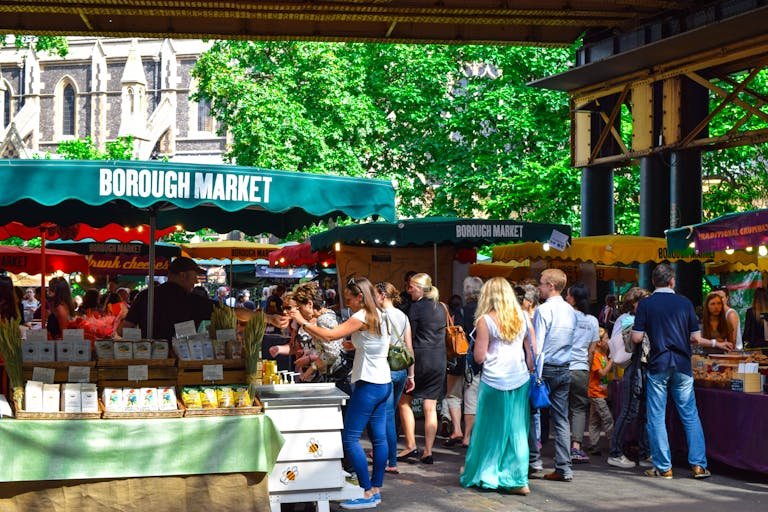
Borough Market is one of the oldest food markets in England, and while it’s a tourist destination at this point, it’s one that actually delivers. The market itself has a solid selection of vegan-friendly stalls, fresh produce, artisan bread, international street food, and specialty ingredients you won’t find at a regular supermarket.
What makes it especially good for plant-based travelers is Mallow, a 100% vegan restaurant located right inside the market at 1 Cathedral Street. It’s run by the same team behind Mildreds, London’s most beloved vegan restaurant group, and the menu focuses on seasonal, sustainable, globally inspired plates. Think banana blossom tacos, croquettes, and rotating small plates built around whatever’s looking good at the market that week.
Arrive hungry, wander the stalls first, then settle in at Mallow for a proper sit-down meal. It’s one of the most satisfying combinations you can do in a single afternoon in London.
4. Make Mildreds Your Reliable Go-To Across the City
Mildreds has been feeding vegans (and converting skeptics) in London since 1988. They now have six locations scattered across the city, Soho, Camden, King’s Cross, Covent Garden, Dalston, and Victoria, which means no matter which neighborhood you’re spending time in, there’s almost certainly a Mildreds within reach.
The menu is globally inspired and rotates with the seasons. Signatures include a kimchi bokkeumbap, a mushroom ale pot pie, and a Korean fried chick’n burger that regularly makes people forget what they were missing. The atmosphere is relaxed and loud in the best possible way, exactly what you want after a long day of sightseeing.
No reservations are needed at most locations, which makes it a great option when you don’t feel like planning ahead. Just walk in, grab a table, and order a round of cocktails while you figure out the rest.
5. Head to Bristol for the Best Vegan Scene Outside London
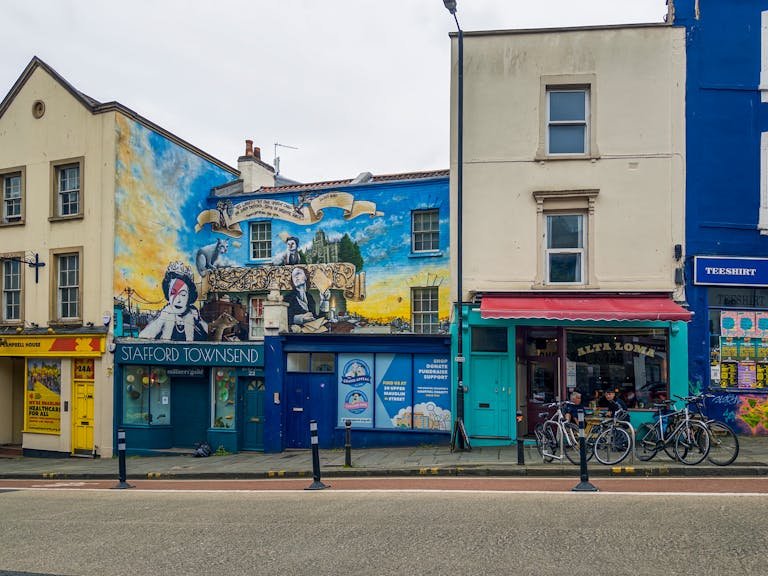
If your England trip goes beyond London, Bristol deserves a serious slot on your itinerary. Research consistently places it as the top vegan city in the UK outside of the capital, with more than 50 vegan-friendly restaurants scoring 4.5 stars or higher. The city has a creative, independent spirit that filters directly into its food scene, you’re not going to find a lot of corporate chains here.
The Stokes Croft area is where a lot of the action is, lined with independent cafés, plant-based eateries, and spots that feel like they’ve been there forever and are run by people who genuinely care about what they’re serving. The city also has a great street food market culture, so even a casual wander tends to turn up something worth eating.
Bristol is about an hour and forty-five minutes from London Paddington by train, making it an easy day trip or a natural next stop on a longer England trip.
6. Spend a Weekend in Brighton for Vegan Markets and Beach Vibes
Brighton has one of the most concentrated vegan communities in the UK relative to its size, and it shows in the food. Every Saturday, the Brighton Vegan Market runs at the Open Market, selling homemade plant-based food, specialty snacks, ethical clothing, and handmade goods. It’s part farmers’ market, part community event, and genuinely fun to spend a morning at.
Beyond the market, the city is packed with independent vegan and vegan-friendly spots, from casual cafés to more polished restaurants. The whole place has a festival energy that makes it feel like a good time even when nothing specific is happening.
Brighton is about an hour south of London Victoria by train, making it an easy weekend trip. Pack light, walk the seafront, eat well, and let the city do the rest.
7. Use HappyCow and Save Offline Maps Before You Travel
England’s mobile coverage in cities is solid, but if you’re hopping between neighborhoods in London or taking day trips to smaller towns and villages, you can’t always count on a smooth signal exactly when you need it. Doing the prep work at home saves a lot of frustration later.
HappyCow is still the best tool for finding plant-based options in England. The database is extensive and well-maintained, and the filters let you sort by fully vegan, vegetarian, or vegan-friendly so you’re not wading through results that don’t apply.
- Create a HappyCow list for each city you’re visiting and save every spot you might want to try
- Add those locations to a Google Maps list and download offline maps for each city before you leave your accommodation
- Screenshot the addresses of your top two or three picks each morning, old school, but it works when your phone decides to die at 4pm
- Check the “Open Now” filter when you’re hungry and working without a plan, it narrows things down fast
8. Look for the Vegan Trademark Sunflower on Packaged Goods
| Label Type | What It Means |
| Vegan Society Sunflower | Internationally certified vegan |
| “Suitable for Vegans” text | Brand self-declared, usually reliable |
| Vegetarian Society logo | Vegetarian only — check for dairy/eggs |
| “May contain” warning | Manufacturing cross-contact — personal call |
Shopping in English supermarkets is genuinely one of the easier vegan grocery experiences in the world. Major chains like Tesco, Sainsbury’s, Waitrose, and M&S all have dedicated plant-based sections and clearly label vegan products throughout the store.
The Vegan Society Sunflower trademark is the gold standard for certified products. You’ll see it on everything from chocolate to toiletries. Most products also include “Suitable for Vegans” in plain text somewhere on the back label if they haven’t gone through formal certification, which is usually equally trustworthy.
M&S Plant Kitchen and Tesco Plant Chef are both solid own-brand ranges worth knowing. If you’re stocking up on snacks or groceries for a self-catering stay, these ranges give you a lot of quality options at reasonable prices.
9. Try a Vegan Full English Breakfast
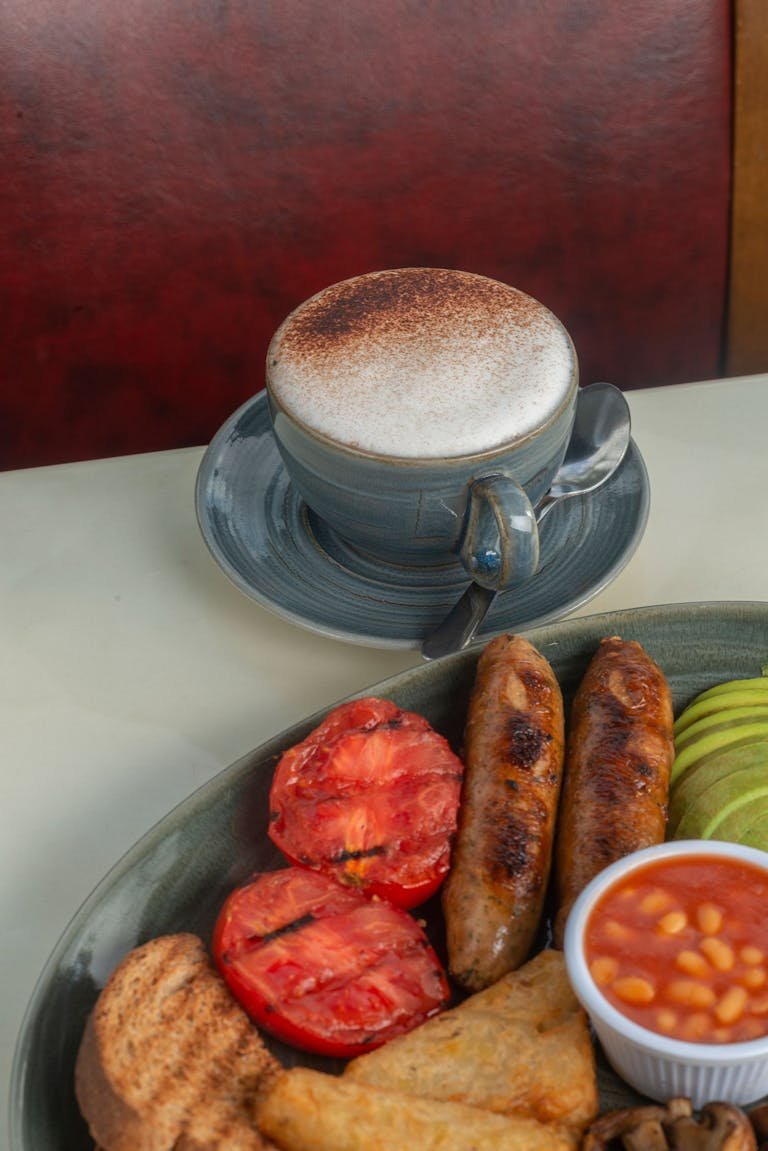
The full English breakfast is one of Britain’s most iconic meals, and the good news is it translates brilliantly to plant-based. Several vegan restaurants and cafés across the country serve a proper vegan fry-up, and the versions are genuinely good, not a consolation prize.
A proper vegan full English typically includes plant-based sausages, baked beans (which are naturally vegan), grilled tomato, sautéed mushrooms, wilted spinach, and thick toast with dairy-free butter. Some spots add scrambled tofu or vegan black pudding for extra authenticity.
In London, Mildreds does a weekend brunch that covers this well. In Brighton and Bristol, look for independent cafés in the neighborhoods closest to where you’re staying, the independent spots tend to do a better job than larger chains. Ask for oat milk with your tea and you’re set for the morning.
10. Explore the Plant-Based Scene in Manchester
Manchester has become the Northern capital of vegan food in England, with a growing number of plant-based restaurants, cafés, and market stalls spread across the city. The Northern Quarter is the neighborhood to focus on, it’s compact, walkable, and dense with independent food spots that skew heavily toward the creative and the casual.
The Allotment in Manchester city center is worth a visit for a more considered plant-based dinner, it focuses on local, seasonal ingredients and runs a rotating menu that takes vegetables seriously in the same way a quality fine dining kitchen would.
Manchester is about two hours from London Euston by train, and it makes a great base for exploring the north of England more broadly. The city has a strong music and arts culture that adds an extra layer to the trip beyond just the food.
11. Book Accommodation with a Kitchen When You Can
| Feature | Standard Hotel | Apartment/Self-Catering |
| Kitchen access | None | Full kitchen |
| Breakfast | Pre-set buffet | Shop the market yourself |
| Cost in London | Often very high | Usually more affordable |
| Flexibility | Limited | Cook whatever, whenever |
London is expensive. Let’s just say that directly and plan accordingly. Eating out for every single meal in a city where a casual dinner for two can easily run £60–80 adds up fast. Booking an apartment or a self-catering place with a proper kitchen changes the economics of the whole trip.
England’s supermarkets are exceptional for plant-based groceries, so stocking up on breakfast and lunch ingredients is easy and affordable. Save the restaurant budget for the meals that actually deserve it, a tasting menu at Plates, a long lunch at Mallow, a Sunday brunch at Mildreds.
Look for Airbnb and VRBO listings that specifically mention a hob (stovetop) and a full-size fridge. A kettle alone won’t cut it if you’re planning to cook properly.
12. Pack Snacks for Train Travel Between Cities
England has excellent rail connections between its major cities, but train station food is a mixed bag for vegans. The grab-and-go options at most stations lean heavily on cheese sandwiches, meat pasties, and sugary pastries. There are usually a few vegan-friendly items available, M&S Food at larger stations is your best bet, but having your own snacks removes the guesswork entirely.
Stock up at a supermarket before you travel. These hold up well in a bag and keep you going between cities:
- Oat bars from brands like Oatein or Nakd, widely available, good protein, no nonsense
- Houmous and veg packs from M&S or Sainsbury’s, genuinely satisfying and easy to eat on the go
- Roasted chickpeas, lightweight and filling, won’t get crushed in a bag
- Fresh fruit from a market, grab whatever looks good the morning you’re traveling
Carry a refillable water bottle. England’s tap water is fine to drink everywhere, so you’ll never need to buy a plastic bottle.
13. Take a Vegan Food Tour in London
One of the fastest ways to understand a city’s food scene is to let someone who knows it well take you through it. London has a growing number of vegan-specific food tours, particularly in neighborhoods like Shoreditch, Brixton, and Borough Market, that combine history, local culture, and genuinely good eating into two or three hours.
The best tours take you to spots you wouldn’t necessarily find on your own, the hole-in-the-wall dumpling shop, the bakery that only does three things but does all three perfectly, the market stall run by someone who’s been there for twenty years. It’s the kind of local knowledge that’s hard to replicate through research alone.
Search for options on Airbnb Experiences or see all of my favorite Viator tours for a great vegan food tour. Filter for plant-based or vegan tours specifically. Reading recent reviews before you book is worth the five minutes, tour quality varies a lot depending on the guide.
14. Visit a Wholefood or Independent Health Food Shop
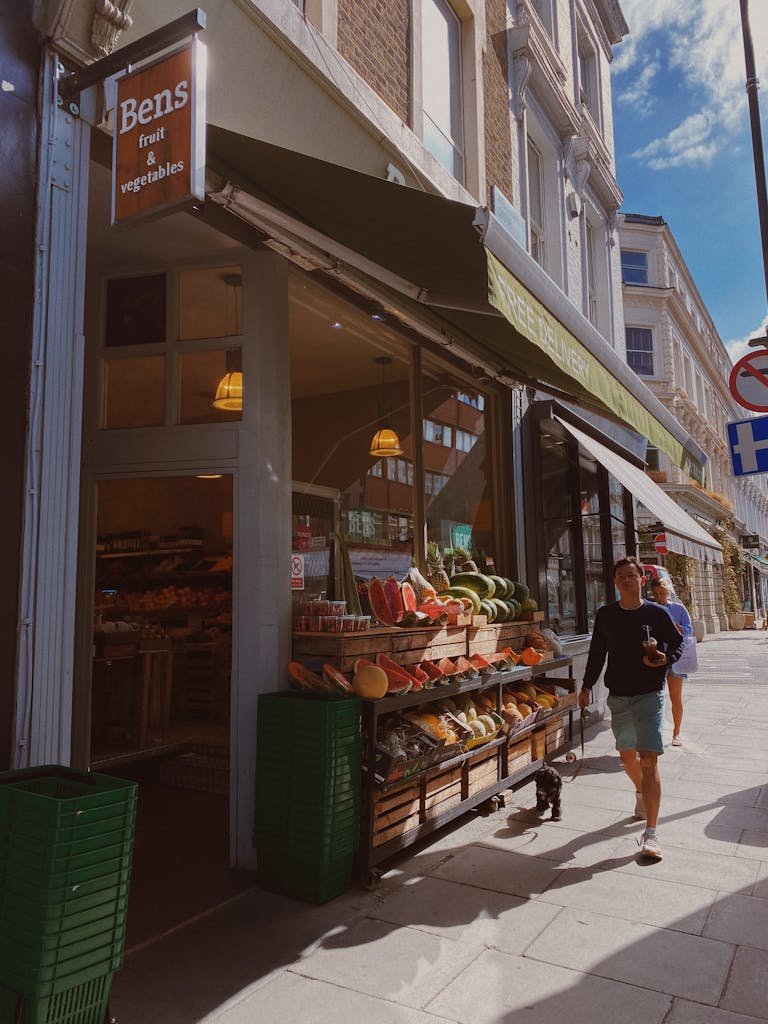
England has a strong network of independent wholefood shops and health food stores that go well beyond what you’ll find at a mainstream supermarket. These are especially useful for picking up specialty items, vegan cheese that’s actually good, obscure snack brands, quality protein bars, or unusual ingredients to cook with.
Holland & Barrett is the most widely recognizable chain and has locations across the country, including in smaller towns and cities. The quality varies by location, but most branches carry a solid range of packaged vegan products, supplements, and snacks.
In London, look for independent wholefood shops in neighborhoods like Stoke Newington, Hackney, and Brixton, these areas have strong local health food cultures and tend to stock smaller, more interesting brands. Planet Organic has several London locations and carries a wide range of fresh and packaged vegan goods including ready meals and specialty dairy alternatives.
15. Research Vegan-Friendly British Pub Food Before You Go
The British pub is a cultural institution, and skipping it entirely just because you’re vegan would be a shame. The good news is that a lot of pubs, particularly in cities and larger towns, now run solid vegan menus alongside their traditional offerings, and some are fully plant-based.
The Spread Eagle in Hackney is London’s first fully vegan pub, serving a plant-based menu that includes proper comfort food classics: tacos, burgers, loaded fries, and a Sunday roast that people travel specifically for. It also has a full bar with vegan wines, craft beers, and cocktails. If you want the full British pub experience without any compromises, this is the place.
When you’re eating at a traditional pub that isn’t specifically vegan, look for dishes like chips (fries), garden salads, vegetable curries, and jacket potatoes. Always ask whether the chips are cooked in separate oil and whether the bread contains butter, those are the two most common hidden ingredients in pub kitchens. Most places are used to the question and happy to check.
Wrapping Up
England is one of the easiest countries in the world to travel as a vegan, and it gets better every year. London has a plant-based restaurant scene that rivals any city on earth right now, and cities like Bristol, Brighton, and Manchester are genuinely worth the trip on their own merits. Whether you’re going for a long weekend or a full two-week adventure, these 15 tips give you everything you need to eat well, spend smart, and actually enjoy the experience. Thinking about planning a trip to England and want some help putting the details together? Send me a message,I love helping people plan trips like this. I also have 15 tips on other countries, including Italy and France!
Is England a good destination for vegan travelers?
England is one of the best vegan travel destinations in the world. London has more than 100 fully vegan restaurants and thousands of vegan-friendly spots, and cities like Bristol, Brighton, and Manchester have thriving plant-based scenes of their own. The country’s supermarkets are also excellent for vegan groceries, making self-catering trips very easy.
What is the best vegan restaurant in London?
Plates London in Shoreditch became the UK’s first Michelin-starred vegan restaurant in 2025 and is widely considered the top plant-based fine dining experience in the country. For more casual everyday dining, Mildreds, with six locations across London, is a reliable and beloved favorite that has been serving vegan food since 1988.
What traditional British foods are vegan-friendly?
Several British staples are naturally vegan or easily made vegan. Baked beans are a classic example, they’re a standard part of the full English breakfast and completely plant-based. Chips (fries) are vegan when cooked in plant oil. Many pub side dishes like roasted potatoes and garden salads are naturally plant-based, and a growing number of pubs now offer dedicated vegan menus.
Which English cities outside London are best for vegan food?
Bristol consistently ranks as the best vegan city in England outside of London, with a dense concentration of independent plant-based cafés and restaurants particularly in the Stokes Croft area. Brighton is close behind, with a vibrant weekly vegan market and strong plant-based food culture. Manchester has grown significantly in recent years and is now considered the top vegan city in the north of England.
What is the best market for vegan food in London?
Borough Market is a strong choice, with a wide range of vegan-friendly stalls and Mallow — a fully vegan restaurant run by the Mildreds team — located right inside the market at 1 Cathedral Street. It’s a great place to spend a morning grazing and then sit down for a proper lunch.