
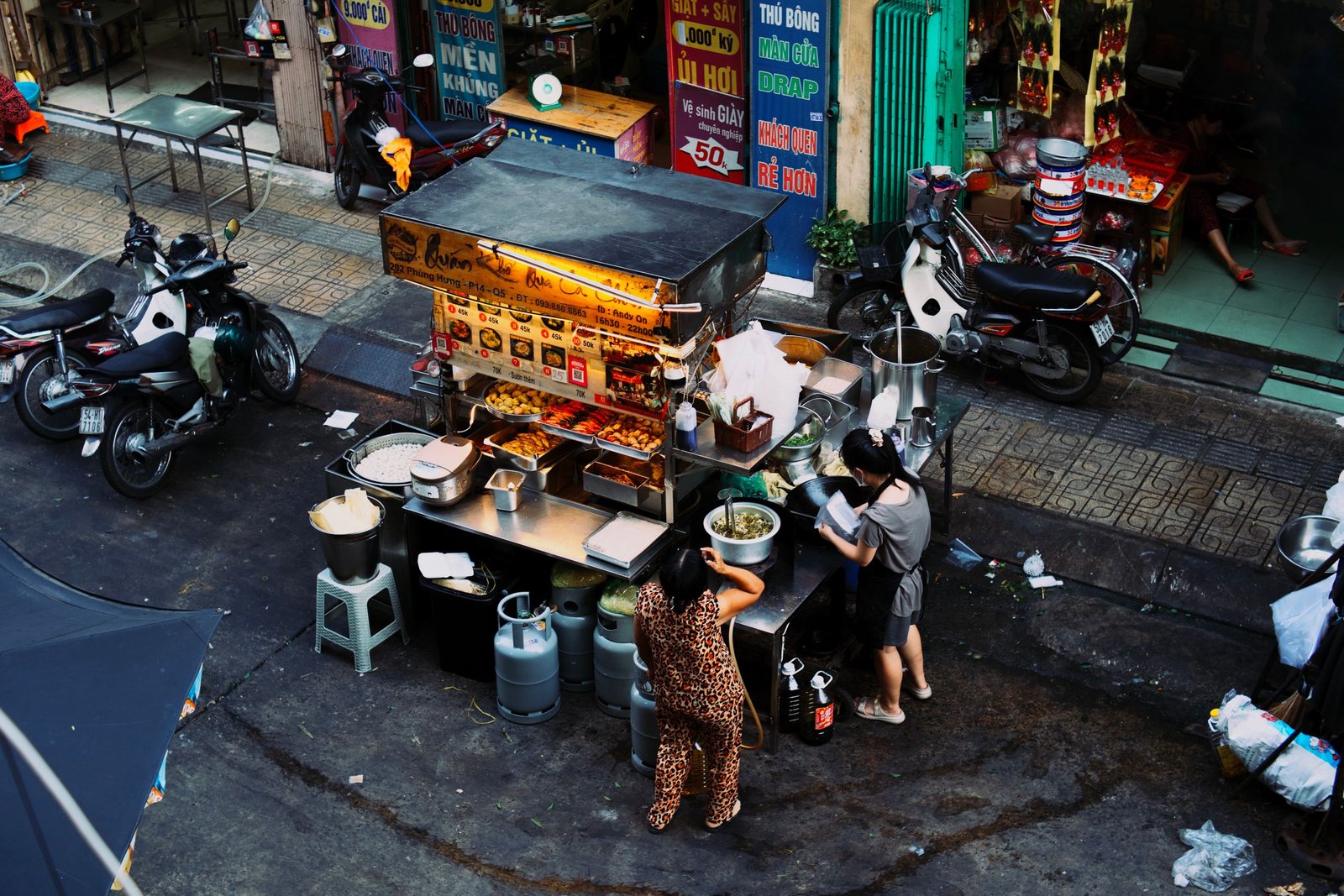
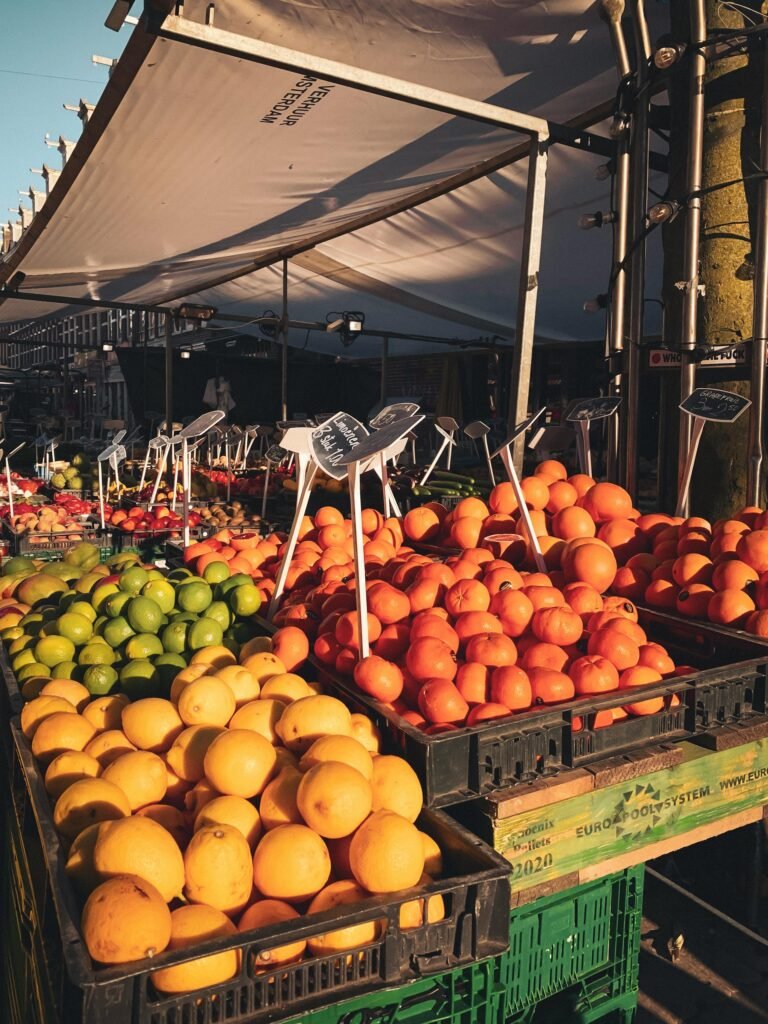
Some of the best food you’ll ever eat while traveling was never designed with you in mind. No special menu, no “vegan option” label, no substitutions required. It’s just how the dish has always been made.
That’s the whole beauty of accidentally vegan street food. These are dishes that have been around for generations, sometimes centuries, built entirely from plants because that’s what was available, affordable, and delicious. And now here you are, a plant-based traveler, with a world full of incredible food that’s already yours to enjoy.
Whether you’re wandering through a night market in Bangkok, grabbing something quick near a metro stop in Mexico City, or exploring the backstreets of Marrakech, there are accidentally vegan street foods waiting for you on nearly every continent. Here’s a look at some of the best ones.
Why Accidentally Vegan Street Foods Are a Traveler’s Secret Weapon
Seeking out dedicated vegan restaurants while traveling can be time-consuming, and often times the best food in a city isn’t at a restaurant at all. It’s on the street, sold from a cart, a grill, or a steaming pot that’s been running since before sunrise.
When a dish is accidentally vegan, it means it fits naturally into the culture around it. You’re not eating a compromise version of something. You’re eating the real thing. That matters, both for the experience and for how the food tastes.
The other nice thing? These dishes tend to be inexpensive, widely available, and popular with locals. Finding them isn’t some insider secret, you just need to know what to look for.
Make sure you check out the Best Vegan Friendly Destinations By Region as well! These guides go perfectly together!
Accidentally Vegan Street Foods by Region
Africa
Ful Medames (Egypt, Sudan, and across East Africa): Slow-cooked fava beans served with olive oil, cumin, garlic, and lemon. It’s eaten for breakfast across Egypt and much of East Africa, and it’s been a staple since ancient times. You’ll find vendors selling it from giant pots early in the morning, and it’s completely plant-based as it’s traditionally prepared.
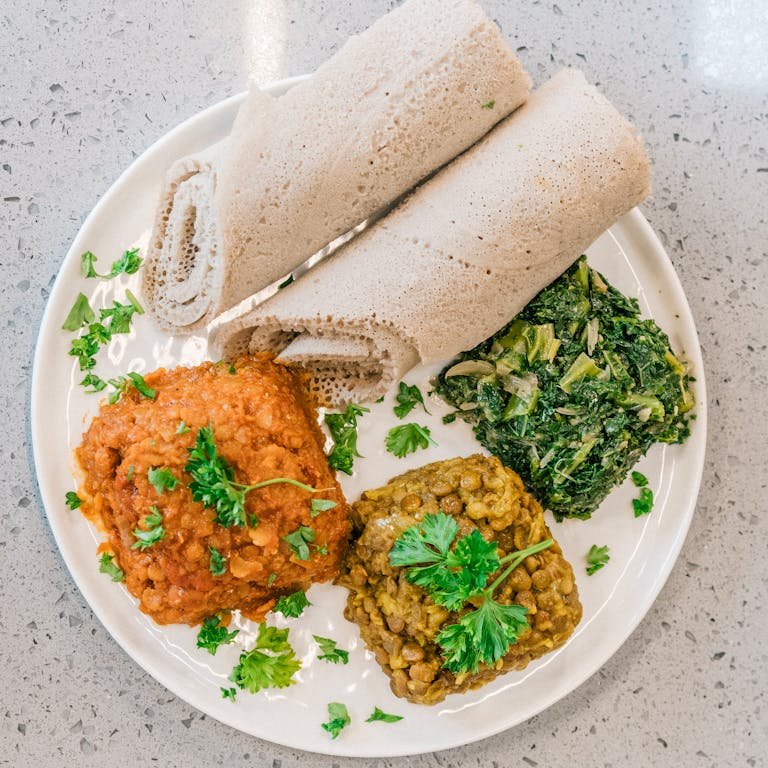
Injera with Misir Wat (Ethiopia): Injera is a spongy sourdough flatbread made from teff, and misir wat is a slow-cooked spiced red lentil stew. Together, they’re one of the most satisfying combinations you’ll find anywhere in the world. Ethiopian cuisine uses a calendar based on fasting periods that prohibit animal products on certain days, which means vegan food is deeply woven into the culture.
Roasted Corn (Pan-African): Grilled maize from a roadside charcoal grill, sometimes brushed with salt or chili. Simple, smoky, and completely plant-based. You’ll find versions of this across sub-Saharan Africa.
Asia
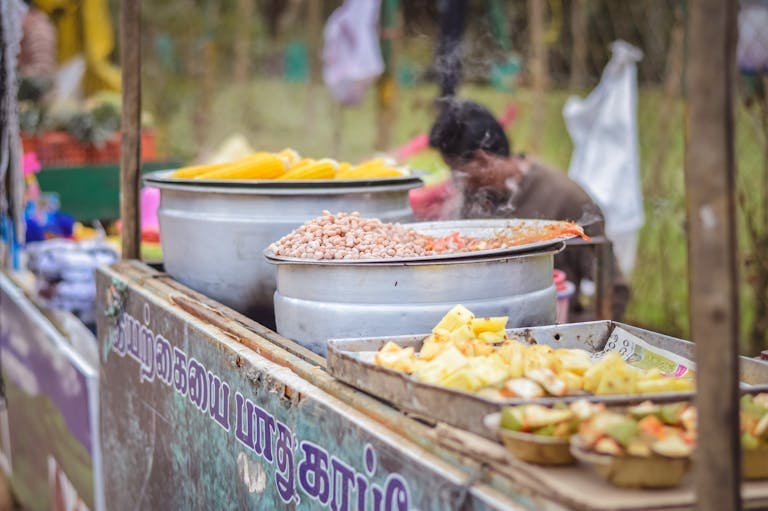
Chana Masala (India): Spiced chickpeas cooked in a tomato and onion gravy, served with flatbread or rice. It’s one of the most popular street foods across northern India, and the base recipe has always been vegan. Watch out for ghee in some versions.
Mango with Sticky Rice (Thailand): Fresh mango over glutinous rice with coconut milk. It’s the kind of dessert that sounds simple but stops you in your tracks. Most versions are made with coconut milk rather than dairy, and it’s widely available from street carts across Thailand, especially in summer.
Dango (Japan): Skewered rice dumplings coated in a sweet soy glaze or filled with red bean paste. Traditional dango is typically dairy-free and egg-free, though recipes do vary by region and vendor. The mitarashi variety, glazed with a sweet soy sauce, is one of the safest bets.
Tahu Goreng (Indonesia): Fried tofu served with a sweet peanut dipping sauce and fresh vegetables. Tofu has been a staple protein in Indonesian street food for centuries, and this particular preparation is reliably plant-based at most traditional stalls.
Chaat (India and Pakistan): A broad category of tangy, crunchy street snacks, typically made from puffed rice, fried dough, chickpeas, potatoes, chutneys, and citrus. The flavor complexity here is genuinely impressive. Most chaat is naturally vegan, though some vendors add yogurt-based sauces, so a quick check before ordering is worth it.
While you’re there, you might as well check out the best animal sanctuaries in Asia. They are absolutely worth a visit.
Middle East and North Africa

Falafel (Egypt, Lebanon, Israel, and beyond): Crispy, herb-packed chickpea fritters stuffed into flatbread with tomato, cucumber, tahini, and pickled vegetables. Falafel has been a street food staple in the Middle East for well over a century. The base is inherently vegan, though some vendors add egg as a binder, a good thing to ask about.
Hummus with Flatbread (Pan-regional): Ground chickpeas, tahini, lemon, and garlic, served warm with olive oil and eaten with pita or laffa. In Lebanon and Israel especially, hummus is treated as a full meal, not just a dip. Many hummus shops open in the early morning and sell out by noon.
Msemen (Morocco): A flaky, layered flatbread cooked on a griddle and eaten plain or with argan oil and honey (ask for just oil to keep it fully vegan). It’s a Moroccan breakfast staple, sold fresh from carts near medina entrances and market stalls.
Latin America
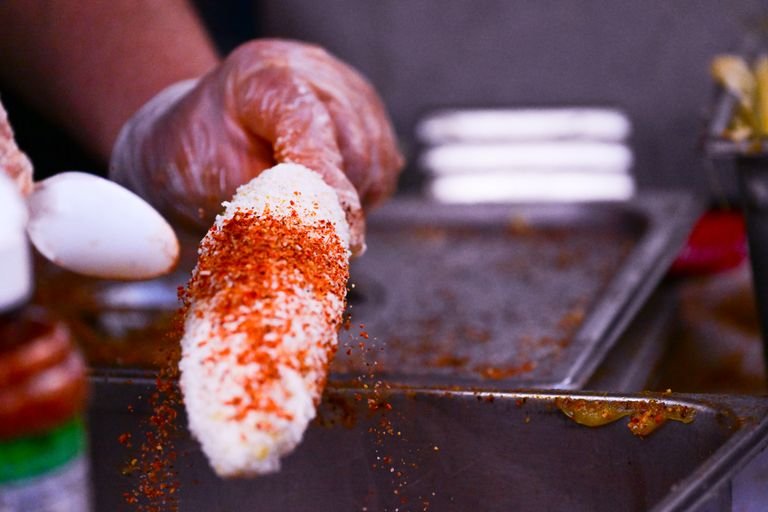
Elotes and Esquites (Mexico): Elotes are whole grilled corn on the cob typically served with mayo, cotija cheese, and chili, but the vegan version skips both and loads up on lime, chili powder, and salt instead, and it’s just as good. Esquites are the same flavors in a cup with corn kernels. Ask for it “sin mayonesa y sin queso” and you’re set.
Tostadas de Frijoles (Mexico and Central America): Crispy fried tortillas topped with refried black beans, salsa, and sliced vegetables. When ordered plain without cheese or sour cream, this is a completely plant-based street food that costs almost nothing and tastes like everything.
Arepas de Choclo (Colombia and Venezuela): Sweet corn cakes cooked on a griddle. The plain version contains no animal products. They’re sold from carts across Colombia and Venezuela and eaten morning through evening.
Europe
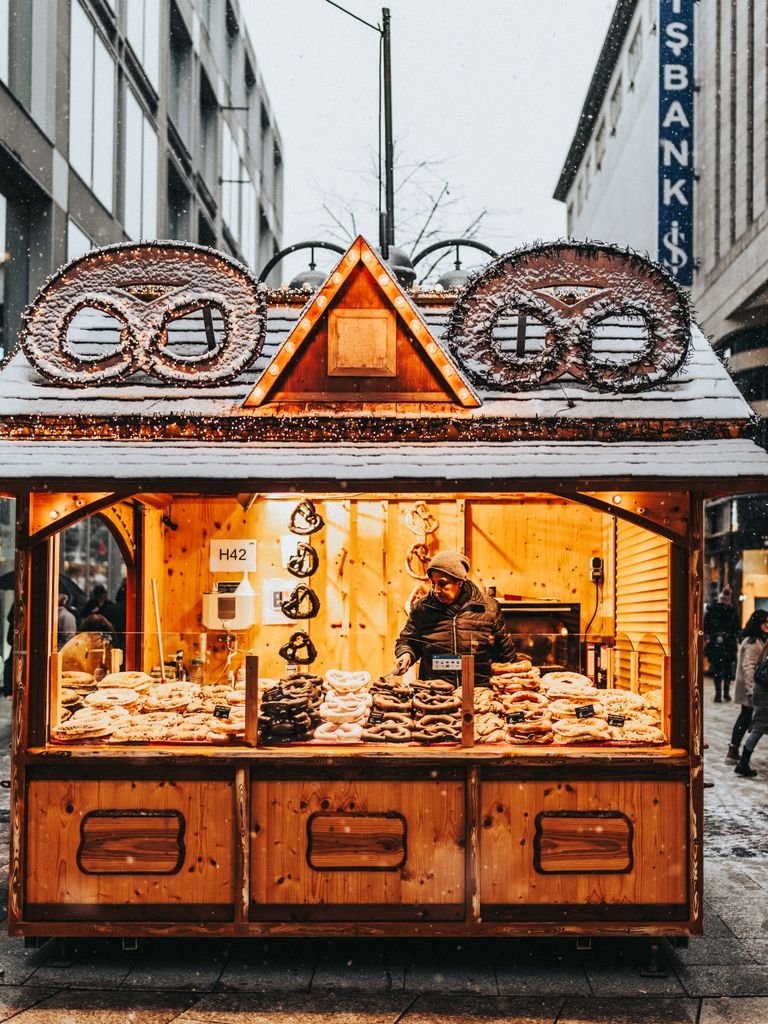
Pretzels (Germany and Austria): Traditional laugenbrezel, the big soft kind from a bakery or market stall, are typically made with just flour, water, salt, yeast, and lye. No dairy, no egg. They’re a safe, satisfying grab-and-go option in any German-speaking country.
Roasted Chestnuts (Pan-European in winter): Sold from charcoal carts in Rome, Paris, Lisbon, and dozens of other European cities from October through February. Smoky, sweet, and nothing in them but the chestnut itself.
Patatas Bravas (Spain): Crispy fried potatoes served with a spiced tomato sauce. The classic version is completely plant-based. Some restaurants add aioli, but at a street stall with just bravas sauce, this one’s reliably vegan.
How to Spot Accidentally Vegan Street Foods When You’re Traveling
The quickest way to find them is to pay attention to what the locals are eating. Dishes built around legumes, grains, vegetables, and spices are your best signal. When a food culture relies on these ingredients by default, accidentally vegan options tend to be everywhere.
A few other things to look for:
High turnover stalls: Busy stalls prepare food fresh constantly, which means you’re less likely to get something that’s sat in a sauce made with an unexpected ingredient.
Simple ingredient lists: The fewer the ingredients, the easier it is to understand what you’re getting. A bowl of boiled chickpeas, olive oil, and cumin is easy to verify. A complex curry with a dozen ingredients might warrant more questions.
Naturally plant-heavy cuisines: Indian, Ethiopian, Mexican, and Middle Eastern street food skew heavily plant-based by tradition. These are the safest bets for travelers who want accidentally vegan options without having to do much work.
A Few Things to Watch Out For
Accidentally vegan doesn’t mean universally vegan. Regional variations, family recipes, and individual vendors all make a difference.
Hidden dairy: Ghee is used widely in Indian, Pakistani, and some Middle Eastern cooking. It’s clarified butter, fully animal-derived, and sometimes added to dishes you wouldn’t expect.
Fish sauce and shrimp paste: These are common flavor bases in Southeast Asian cooking, including in Thailand, Vietnam, Cambodia, and Indonesia. What looks like a simple vegetable stir-fry might have fish sauce worked into the sauce.
Lard in dough: In parts of Mexico, Central America, and some European countries, traditional flatbreads, tamales, and pastry doughs are made with lard. Worth asking before assuming.
The easiest fix for all of these is just to ask. Most vendors are happy to tell you what’s in their food, especially if you’re specific about what you’re avoiding rather than just saying “vegan.” Carrying around vegan cards in the language of the country you are visiting is a huge help.
What does “accidentally vegan” mean for street food?
“Accidentally vegan” refers to dishes that contain no animal products simply because of how they’ve always been made, not because anyone set out to create a vegan option. These are traditional, everyday foods rooted in culture and local ingredients that happen to be completely plant-based.
Are all versions of these street foods vegan?
Not always. Regional variations, vendor preferences, and ingredient swaps mean the same dish can differ widely. Always ask about broths, sauces, and frying oils, especially in countries where ghee or fish sauce is a common cooking base.
Which countries are easiest for vegan street food travelers?
India, Ethiopia, Mexico, and Thailand consistently top the list for plant-based travelers. These cuisines rely heavily on legumes, grains, vegetables, and spices, which means accidentally vegan options are often the norm rather than the exception.
How do I ask if street food is vegan in a foreign country?
Learning a few key phrases in the local language goes a long way. Apps like HappyCow and Google Translate can help, but the most reliable approach is to point to the ingredients and ask directly whether meat, eggs, dairy, or fish sauce are included. Being specific beats using the word “vegan,” which many vendors may not recognize.
Is accidentally vegan street food safe to eat while traveling?
Generally, yes. Plant-based street foods carry no more risk than any other street food. The same standard travel food safety rules apply: eat at busy stalls with high turnover, watch the food being prepared fresh, and avoid anything that’s been sitting out for a long time.
Get Out There and Eat
The world has an enormous amount of incredible plant-based food in it, and most of it wasn’t made for vegans. It was made for hungry people using the best ingredients available. You get to benefit from centuries of culinary tradition every time you grab a falafel in Cairo, a bowl of chana masala in Delhi, or a paper cone of roasted chestnuts in Rome.
The key is knowing what to look for and being willing to ask a few quick questions when you’re not sure. The rest takes care of itself.