
This content is reader-supported, which means if you click on some of our links, we may earn a small commission at no additional cost to you.
Vegan travel apps are the reason your trip doesn’t turn into a scavenger hunt for something, anything!, you can eat. HappyCow gets all the credit, and it deserves most of it, but it’s not the only tool worth having on your phone. Between airport layovers, packaged snacks with ingredient lists in a language you don’t read, and figuring out where to stay that actually gets what “vegan” means, there’s a whole toolkit that makes travel smoother once you know it exists.
This isn’t a “replace HappyCow” list. Keep it. Use it. It’s still the best all-around restaurant finder out there. But pair it with a few of the apps below and you’ll spend a lot less time guessing and a lot more time actually eating well.
Why One App Isn’t Enough for Vegan Travel
HappyCow is built for one job: finding vegan and vegan-friendly restaurants. It does that job well. What it doesn’t do is help you figure out what’s actually in a packaged snack at a foreign grocery store, tell you which terminal at your layover airport has something other than a bag of pretzels, or connect you with a place to stay where the host already knows what “cross-contamination” means.
That’s where a small, purpose-built app stack comes in. You don’t need quantity here. You need the right five or six apps doing the jobs HappyCow was never designed to do.
The Best Vegan Travel Apps Besides HappyCow
Here’s the lineup, organized by what each one actually solves.
Vegan Maps

Vegan Maps is the closest thing to a HappyCow backup. It’s a free vegan restaurant finder app that lists exclusively vegan and vegetarian spots, which is useful when you specifically want a fully plant-based menu rather than sorting through “vegan options available” listings. Its database isn’t as massive as HappyCow’s, but in cities with a decent vegan scene, it often surfaces a spot or two that HappyCow’s crowd hasn’t gotten to yet.
Why it’s worth downloading: it’s a genuinely different dataset, not just a mirror of HappyCow’s listings, so cross-checking both before you commit to dinner plans in a new city is a smart habit.
AirVegan
Layovers are their own special kind of vegan travel apps problem. You’re stuck in a terminal, your options are whatever’s within walking distance of your gate, and you don’t have time to wander. AirVegan solves exactly that. It rates airports by how vegan-friendly they are and tells you which terminal actually has something worth eating, instead of you finding out the hard way that the only “healthy” option is a fruit cup and a bag of almonds.
Best for: long layovers, connecting flights through unfamiliar airports, and anyone who’s ever eaten a sad granola bar for dinner at 30,000 feet of altitude and regretted it.
Too Good To Go
Too Good To Go isn’t a vegan-specific app, but it earns its spot here anyway. It connects you with restaurants, bakeries, and grocery stores that have surplus food at the end of the day, sold at a steep discount to keep it out of the trash. Plenty of vegan bakeries, juice bars, and plant-based cafes use it, which means you can score a “mystery bag” of baked goods or prepared food for a fraction of the price while also cutting down on food waste.
It’s active across most of Europe, North America, and Australia, so it’s a solid one to have loaded before you land almost anywhere.
Why vegan travelers love it: it turns your evening walk back to the hotel into a treasure hunt for cheap, good food instead of another delivery order.
Google Translate
This one isn’t vegan-specific either, but it might be the single most useful app on this entire list. The camera translation feature lets you point your phone at a menu or an ingredient label and get an instant readout, which matters enormously once you’re somewhere your dietary vocabulary doesn’t quite reach. “No dairy, no eggs, no honey” translates very differently depending on where you are, and having a reliable way to communicate that clearly, without relying on hand gestures and hope, removes a huge amount of travel stress.
Yuka
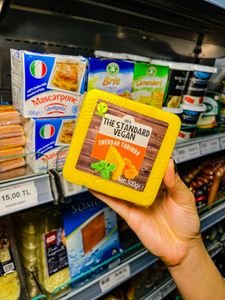
Yuka scans barcodes and gives you a quick readout on what’s actually in a packaged product, which is genuinely handy at a foreign grocery store when you’re staring at an ingredient list you can’t parse. It’s built around a general health score rather than a dedicated vegan flag, so it won’t tell you outright “this is vegan,” but scanning the ingredient list it pulls up is often the fastest way to catch hidden dairy derivatives, gelatin, or honey in something you’d otherwise assume was fine.
Good to know: treat it as a fast ingredient-reading shortcut, not a definitive vegan verdict. When in doubt, read the actual ingredient list Yuka surfaces rather than relying on the overall score alone.
VegVisits
VegVisits works like Airbnb, except every host is vegan. You can book a full apartment, a spare room, or in some cases just kitchen access for a few hours, which is a lifesaver if you’re traveling somewhere with limited restaurant options and want to cook for yourself. The bigger perk is the host. A vegan host already knows the good grocery stores, the one restaurant in town that gets it right, and probably has opinions about the best market for produce.
Best for: longer stays, rural areas, or anywhere you’d rather cook than gamble on a menu.
Meetup
Meetup isn’t built for vegans specifically, but plenty of cities have active vegan and plant-based Meetup groups, and it’s a genuinely good way to get local, current recommendations instead of relying only on what an app database has cataloged. A local group chat or event listing will often know about the vegan pop-up that opened last month faster than any app can index it.
Bonus: it’s also just a nice way to meet people if you’re traveling solo and want some company for a meal.
The Best Vegan Travel Apps Working Together
None of these apps are meant to replace each other, and that’s really the point. A workable stack looks something like this:
- HappyCow for your primary restaurant search
- Vegan Maps as a second opinion when HappyCow comes up thin
- AirVegan loaded before any trip with a layover
- Google Translate running in the background at all times
- Too Good To Go checked once you’ve settled into a city for the evening
- Yuka for grocery store ingredient checks
- VegVisits or a similar host-based platform if you’re staying somewhere for more than a few days
You don’t need all seven running at once. Pick the two or three that solve the specific headaches your trip is likely to bring, and build from there. If you’re island-hopping through somewhere food-scarce, AirVegan and Too Good To Go matter more. If you’re settling into one city for a week, VegVisits and Meetup start to earn their keep.
If you’re still working out where to actually go with all this app-powered confidence, our complete guide to vegan travel is a good next stop, or check out our breakdown of the best vegan-friendly cities in Europe if a city trip is on your radar.
What to Pack for App-Powered Vegan Travel
A good app stack works a lot better with the right gear to back it up. A few things worth having on hand:
- A portable charger, because you’ll be using your phone more than usual to navigate menus and maps
- An offline translation download for areas with spotty signal
- A reusable water bottle
- Emergency protein packs: nuts, jerky, bars
For a fuller packing rundown, our ultimate list of vegan travel accessories covers everything from bamboo utensils to reusable toiletry bottles.
If you’d rather have a local guide handle the food-finding entirely, a vegan food tour is worth considering for your first day or two in a new city.
Frequently Asked Questions
Is HappyCow still the best vegan travel app?
For pure restaurant discovery, yes, it’s still the most comprehensive vegan restaurant finder app available, with the largest database and the most reviews. It just isn’t built to solve every vegan travel problem, which is why pairing it with a few specialty apps rounds things out.
What’s the best free vegan travel app besides HappyCow?
Vegan Maps and Google Translate are both completely free and cover two very different needs, restaurant discovery and communication, making them an easy starting pair if you only want to add one or two apps to your phone.
Do I need a vegan-specific app to eat well in most countries?
Not always. A lot of vegan food while traveling comes down to accidentally vegan dishes and staple ingredients rather than dedicated vegan restaurants. That said, apps like these save a lot of guesswork, especially with packaged food and unfamiliar menus.
Can Google Translate actually read ingredient labels accurately?
It’s very good, not perfect. The camera translation feature handles printed ingredient lists well in most languages, though handwriting or heavily stylized packaging can trip it up. When something matters (a serious allergy, for instance), it’s still worth double-checking with a staff member if you can.
Is Too Good To Go available where I’m traveling?
It covers most of Europe, North America, and Australia at this point, though availability varies by city. It’s worth checking the app before your trip to see what’s active in your specific destination rather than assuming it’s live everywhere.