This content is reader-supported, which means if you click on some of our links, we may earn a small commission at no additional cost to you.
Vegan travel South America is one of those topics I get asked about constantly, usually right before someone books a flight to Lima or Buenos Aires and starts to panic about what they’re actually going to eat. I get it. This is a continent built on beef, dairy, and seafood, and the guidebooks don’t always make it look promising for plant-based travelers. But I’ve spent enough time eating my way through this part of the world to tell you the truth: it’s a lot easier than people think, and in some cities it’s genuinely one of the best places I’ve traveled as a vegan.
This guide is the one I wish I’d had before my first trip. I’m covering which countries and cities make the most sense to start with, what the food actually looks like on the ground, how to handle the language barrier, and what to pack so you’re not scrambling in an airport pharmacy at midnight. Let’s get into it.
Why South America Deserves a Spot on Your Vegan Travel List
I think South America gets skipped over by a lot of plant-based travelers because the reputation precedes it. Argentina is famous for steak. Peru is famous for ceviche. Brazil has churrasco on every corner. None of that is wrong, but it’s also not the whole picture.
What people miss is that South American cuisine is built on an enormous foundation of naturally plant-based staples. Potatoes (Peru alone grows thousands of varieties), quinoa, corn, yuca, plantains, beans, and an incredible range of fruit that most of us have never even seen at home. Add to that a fast-growing plant-based restaurant scene in the bigger cities, and you’ve got a continent that rewards a little planning with genuinely great food.
I’ll be honest that this isn’t a place where you can wing it the way you might in, say, a major European capital. But that’s exactly why a guide like this one helps.
Vegan Travel South America: The Best Countries to Start With
If this is your first trip to the continent, I’d point you toward a handful of countries where the plant-based scene is established enough that you won’t be white-knuckling every meal.
Peru
Peru is probably my top recommendation for vegan travel South America, mostly because of Lima. Lima is a genuine food city, and its plant-based restaurant scene has grown fast over the last several years. Outside the capital, the Sacred Valley and Cusco region lean heavily on potatoes, corn, and quinoa, which makes building a meal much simpler even in smaller towns.
Colombia
Colombia surprised me. Bogotá and Medellín both have a solid and growing number of plant-based spots, and the produce at local markets is some of the best I’ve seen anywhere. Arepas, patacones, and fresh tropical fruit make it easy to eat well even when you’re not near a dedicated vegan restaurant.
Argentina
I know, Argentina and beef are basically synonymous. But Buenos Aires has quietly become one of the strongest plant-based food cities on the continent, with a wave of vegan restaurants, bakeries, and even parrillas doing plant-based versions of classic grilled dishes. Outside the capital, it takes more effort, so I’d lean on apps and a little Spanish.
Ecuador
Ecuador is a great option if you want a mix of cities and nature. Quito has a small but solid plant-based scene, and rural highland cooking already relies on potatoes, corn, and beans in a way that makes vegetarian and vegan requests less unusual than you’d expect.
Chile
Santiago rounds out my list. It’s not as vegan-forward as Buenos Aires or Lima, but the city’s produce markets and growing health food culture mean you’re rarely more than a short walk from something that works.
What to Expect: Cuisine Basics Across the Continent
A few things hold true almost everywhere you go on this continent, and knowing them ahead of time saves a lot of stress.
The staples that will save you
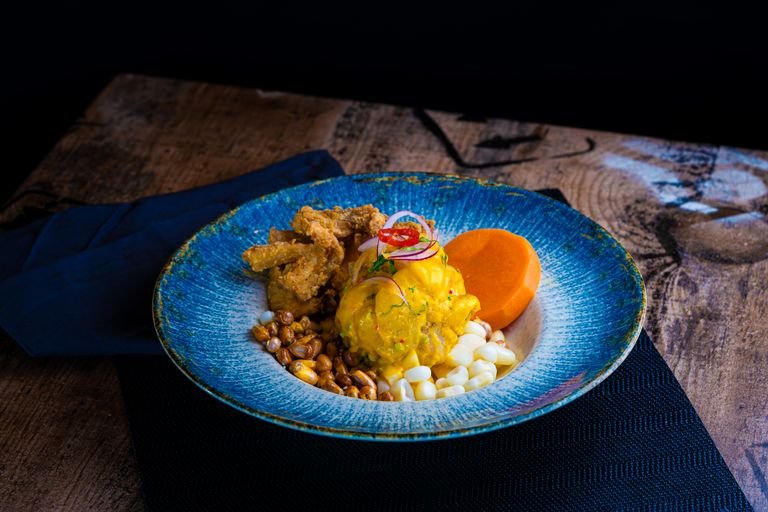
Potatoes, corn, quinoa, yuca, plantains, rice, and beans show up on nearly every menu in some form. These are your safety net. Even in places with zero vegan awareness, you can usually build a real meal out of sides alone.
Dishes that are naturally vegan (or close to it)
Some traditional dishes are already plant-based, or need only a small tweak. Papas a la huancaina without the cheese sauce, various bean and lentil stews, arepas with the right fillings, and plenty of corn and potato-based street food fall into this category. I always ask what’s in a dish before assuming, since dairy and eggs sneak into things that look plant-based at a glance.
Where it gets harder
Rural areas and smaller towns are where things slow down. Meat is still seen as a marker of hospitality in a lot of these communities, and a flat “I’m vegan” sometimes gets lost in translation. This is where a translation card and a little patience go a long way.
Navigating Language and Ordering Vegan Food
I always travel with a written explanation of what I eat, translated into Spanish or Portuguese depending on the country, because pointing to a card is so much more effective than trying to explain veganism on the spot. Apps that catalog plant-based and vegan-friendly restaurants are genuinely useful here too, especially in cities where the scene changes fast.
A few phrases I lean on constantly:
- “Sin carne, sin pollo, sin pescado, sin lácteos, sin huevo” (without meat, chicken, fish, dairy, or eggs)
- “¿Tiene algo vegano?” (do you have anything vegan?)
- “Soy alérgico a los lácteos” (I’m allergic to dairy) can occasionally get faster, more careful results than saying “vegano,” depending on the region
Getting Around: Tours and Excursions
Some of my best vegan travel experiences in South America happened on food-focused tours where a local guide already knew which stalls and restaurants could accommodate me. I’d rather book that kind of tour ahead of time than hope I stumble onto the right place. This is also where booking Machu Picchu treks, Amazon excursions, or city food walks through a platform ahead of arrival takes a lot of guesswork out of the trip. I’ve rounded up some of the best experiences in each of these countries already for you.
What to Pack for Vegan Travel South America
Packing smart matters more here than in a lot of other destinations, mainly because vegan snack options and specific toiletries aren’t always easy to find once you’re on the ground, especially outside major cities.
A short list of what I never leave home without:
- Protein bars or a vegan protein powder for travel days and long bus rides
- A reusable water bottle with a filter, since tap water isn’t reliable in a lot of the region
- A translated allergy or dietary card
- Basic vegan toiletries, since not every pharmacy stocks them outside big cities
For a longer list of my favorite vegan travel accessories, this guide is the place to start.
Common Challenges (and How I Handle Them)
I don’t want to oversell this. There are real friction points, and I’d rather you know them going in than get surprised.
Cross-contamination awareness is low in a lot of smaller kitchens, so if you have a serious allergy on top of being vegan, you’ll want to be extra clear and possibly stick to cities with more established plant-based menus. Menu translations can also undersell how much butter or cream is hiding in a “vegetable” dish, so I ask directly rather than trust the menu description.
None of this has stopped me from having some of my favorite travel meals ever on this continent. It just means going in with a plan instead of assuming.
A Loose Two-Week Route Idea
If you want a starting point rather than a rigid itinerary, this is roughly how I’d structure a first trip focused on vegan travel South America:
- Fly into Lima and spend three or four days exploring the city’s plant-based restaurant scene
- Head to Cusco and the Sacred Valley for four or five days, leaning on potato and quinoa-based dishes
- Fly to Bogotá or Medellín for four days to experience Colombia’s markets and growing vegan cafe scene
- End with three or four days in Buenos Aires, which has enough plant-based variety to make a strong finish

Final Thoughts
Vegan travel South America takes a bit more research than some other destinations, but the payoff is worth it. Between the produce, the staple ingredients, and a plant-based restaurant scene that keeps expanding in the bigger cities, this is a part of the world I keep going back to. Start with the cities on this list, pack smart, and you’ll eat better than you expect.
Frequently Asked Questions
Is South America a good destination for vegan travel?
Yes, especially in cities like Lima, Bogotá, and Buenos Aires, where plant-based restaurants have grown quickly in recent years. Rural areas require more planning, but staple ingredients like potatoes, corn, and quinoa make it manageable almost everywhere.
Which South American country is easiest for vegans?
Peru and Argentina tend to be the easiest starting points, thanks to Lima’s food scene and Buenos Aires’ growing number of plant-based restaurants and bakeries.
What should I pack for vegan travel in South America?
I’d pack protein bars, a filtered water bottle, a translated dietary card, and basic vegan toiletries, since these aren’t always easy to find outside major cities.
How do I say I’m vegan in Spanish while traveling in South America?
“Soy vegano” or “soy vegana” works, but I’ve had better luck explaining specifically what I don’t eat, like “sin carne, sin pollo, sin pescado, sin lácteos, sin huevo.”
Are traditional South American dishes vegan-friendly?
Some are naturally plant-based or close to it, especially potato, corn, and bean-based dishes. Many others use dairy, eggs, or animal fats in ways that aren’t obvious from the menu, so I always ask before ordering.